Evrisia

Evrisia is Electric Puppets’ pioneer project.
Human motion and biometric tracking often overlooks the experience of the human being tracked. By combining motion tracking and biometrics with a cutting edge immersive platform, we will be able to develop many tools, starting with several diagnostic and therapeutic tools for clinical and research use at the IWK Health Center Eye Clinic in Halifax, Nova Scotia.
What Evrisia measures
Starting in the field of Ophthalmology, our product can assist in the measurement of:
- Eye alignment in all 3 rotations (horizontal, vertical and torsional)
- The required correction of these alignments
- Independent eye function
- Visual Acuity
- Contrast Sensitivity
- If and to what extent a subject has stereopsis (depth perception), and
- Colour vision
The platform
Device synced inputs so that a clinician can respond based on verbal cues from the subject, or the subject can respond themselves by making the choice based on the stimulus.
Devices connect to each other via wifi network. They automatically find each other as long as they are set up on the same network, you just have to start the app on both devices.
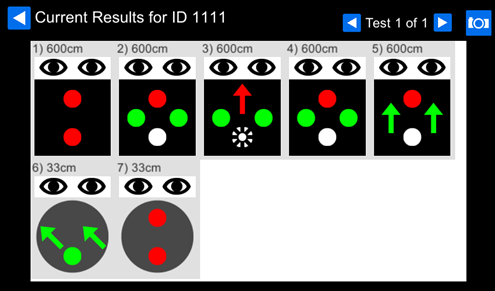
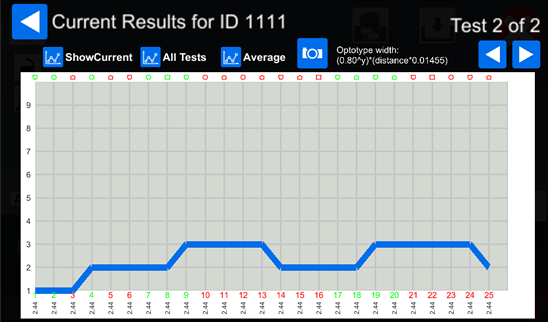
Tests generate more traditional, 2d charts and data driven diagrams to show testing measurement results. (Non diagnostic, purely measurement display)
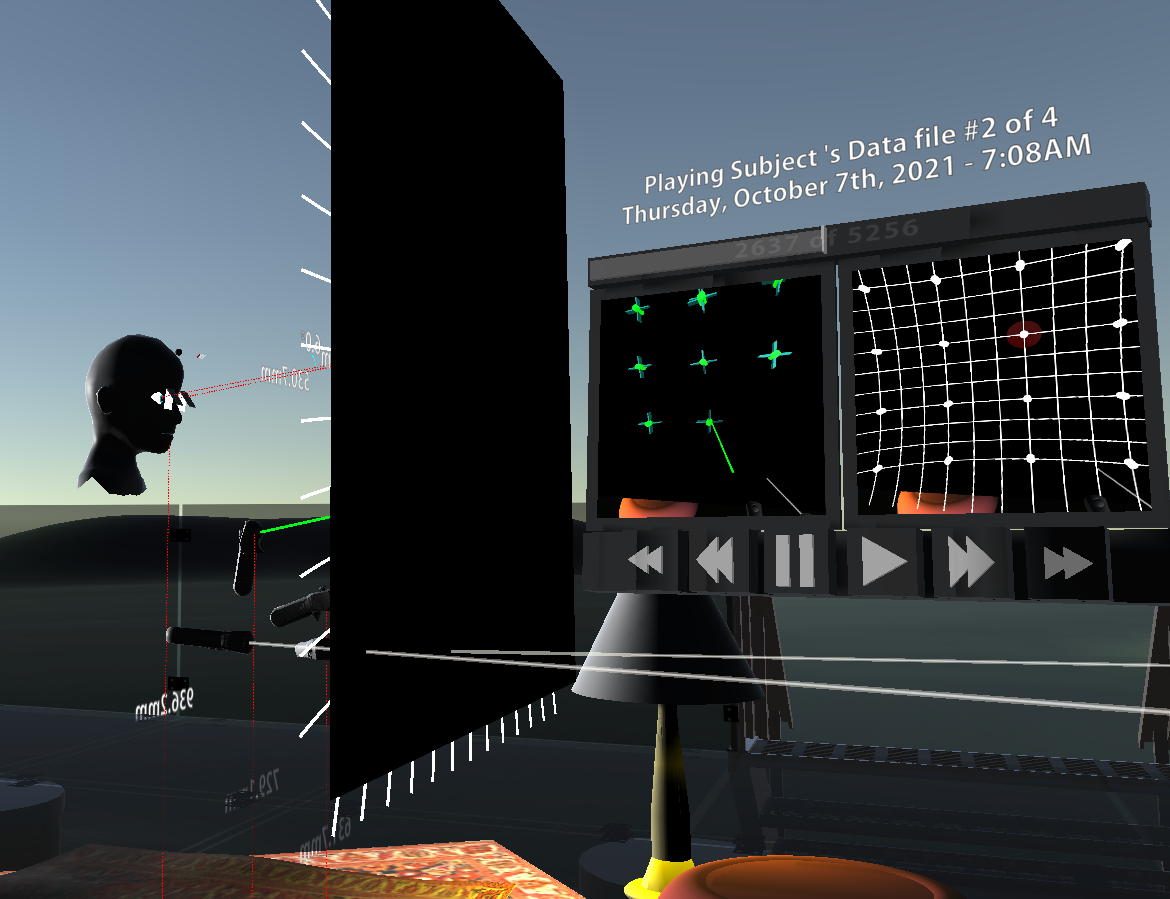
All tests that were previously recorded can be fully analyzed in Virtual Reality later on by the clinician or researcher, they can use a fully 3d interactive interface to pause, seek, and review the session while moving their head around the subject and test objects in VR. It’s like being able to stop time and move around in the frozen environment for closer analysis.
Rebuilding the gold standards
Four standard clinical vision tests, rebuilt in virtual reality. For each, the limitations of the physical instrument and what the software version changes.
Double Maddox Rod
It takes over 30 seconds for the clinician to prepare the frames with all of the materials already on a table.
What is that degree off-set exactly? The distance to the stimulus can vary from test to test depending on the clinician.
The test relies on patient response to understand what they are seeing, causing discomfort from staring into a light.
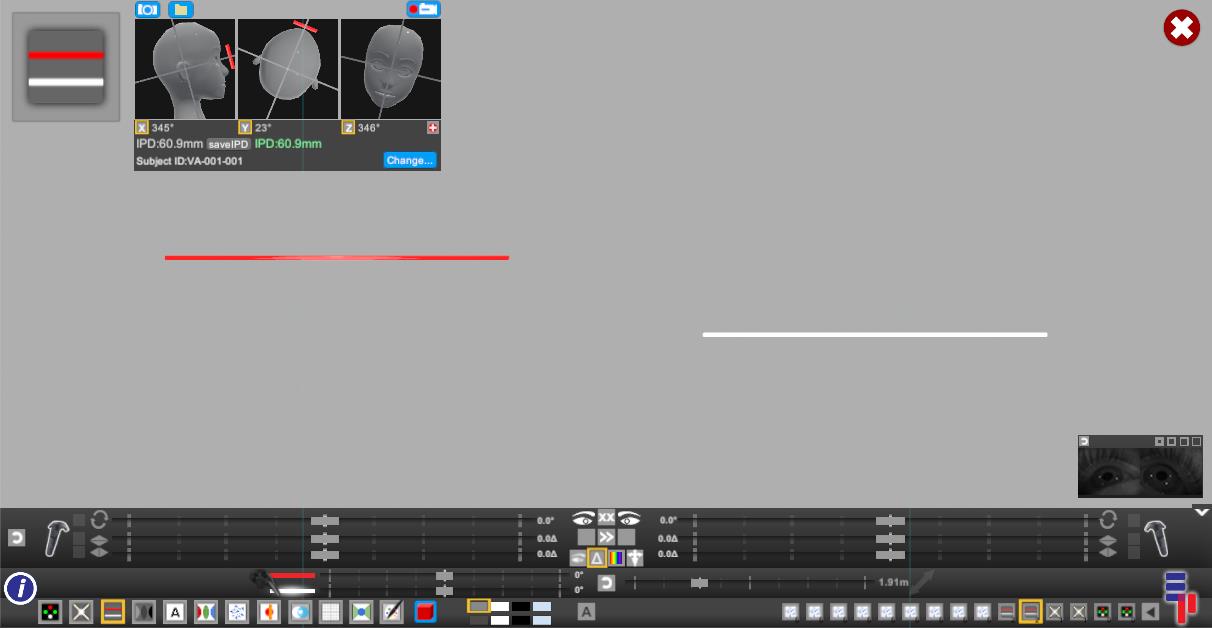
- It can be performed in the same amount of time as it takes to prepare the frames for the old test.
- We can see from the patient’s perspective
- No eye strain from staring into a bright point light
- Exact degree measurements, exact distances, every time
- Video of the eyes (bio-metrics)
- Completely recordable and can be played back in the same VR environment.
- Complete digital record of the visit.
The Frisby Test
This test was developed to assess stereopsis (depth perception) and consists of four panes on glass or acrylic of 3 different thicknesses.
- Shadows, glare help the patient "cheat" the test rendering it useless.
- Watching the test setup also allows the patient to better guess rather than be truly measured.
- Even the angle at which the test is held can affect whether or not the subject can "cheat" the results
- Distance to stimulus can vary by clinician
- Considerable time to conduct the test.
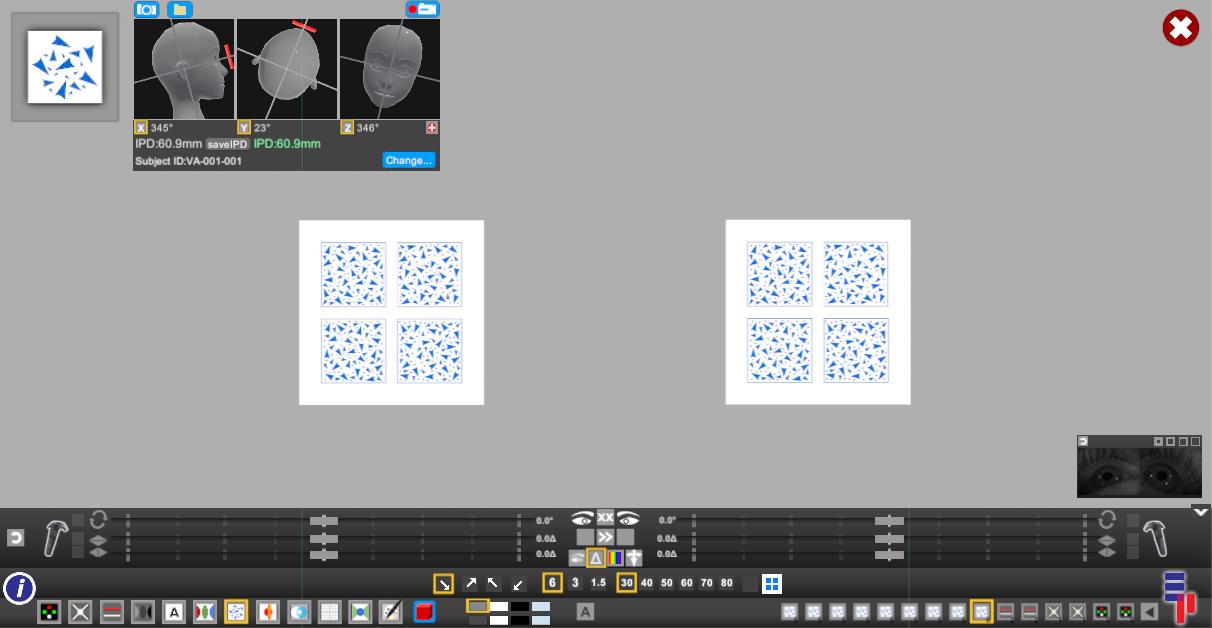
- There are no shadows or glare
- Test can be performed in a fraction of the time it takes to perform the traditional test.
- The software can move the stimulus and settings with the click of a button
- Our software has pre-set distances that are exact every time.
Help folks with Strabismus (cross-eyed) actually DO the Frisby test! Prismatic effects can be applied to either or both eyes during the test, and torsional rotation applied to help the patient achieve stereopsis.
Worth Four Dot
- Requires a minimum six foot lane
- Staff holding flashlight stimulus have inconsistent distance assessments
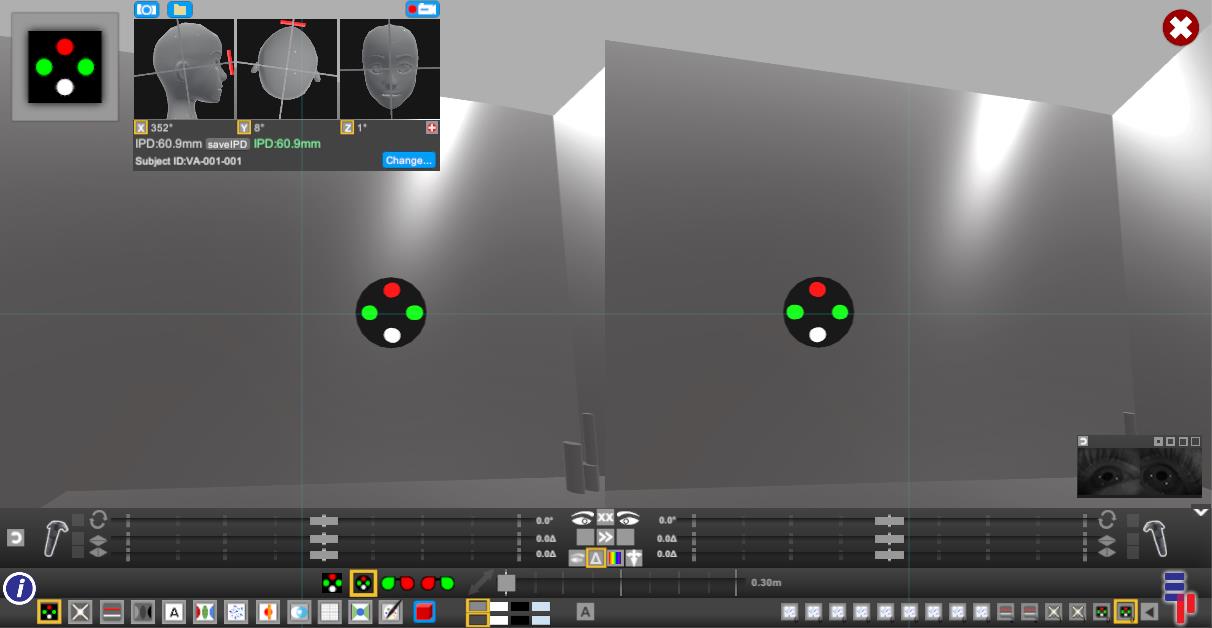
- Our test can be performed in a very small space.
- Stimulus is at exact distances every time
- Record and playback
- Significantly quicker to perform the test
- Ability to apply prismatic effects
Farnsworth D-15
Lighting and shadows impact colour perception.
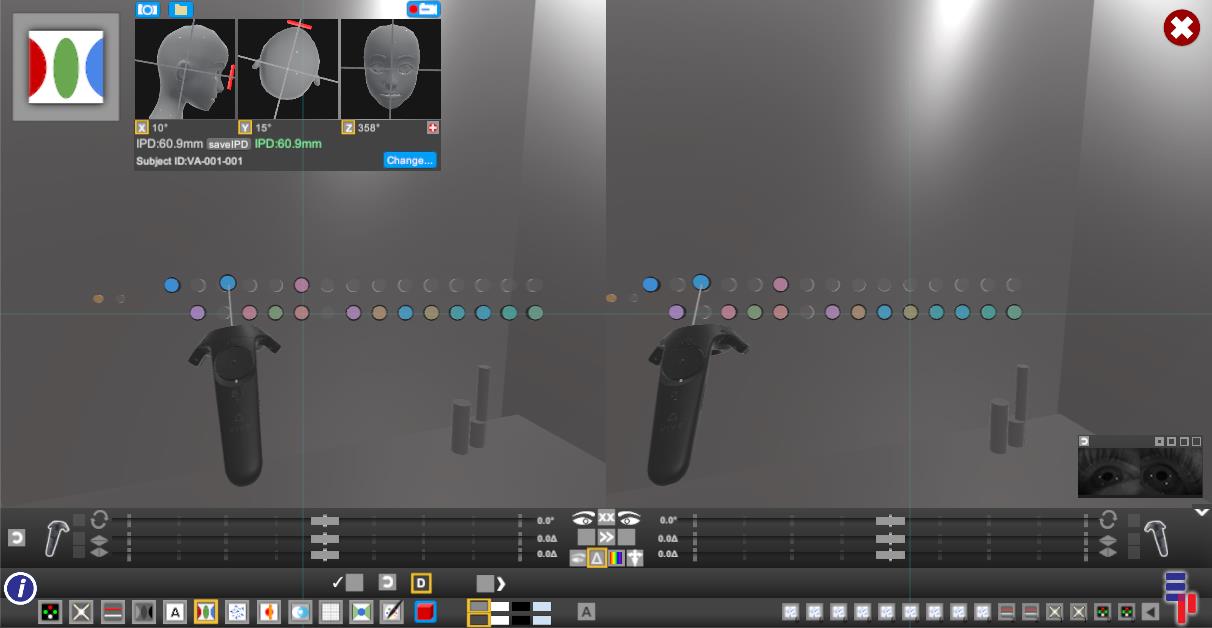
- Perfectly consistent colours
- Record and playback
- Prismatic effects
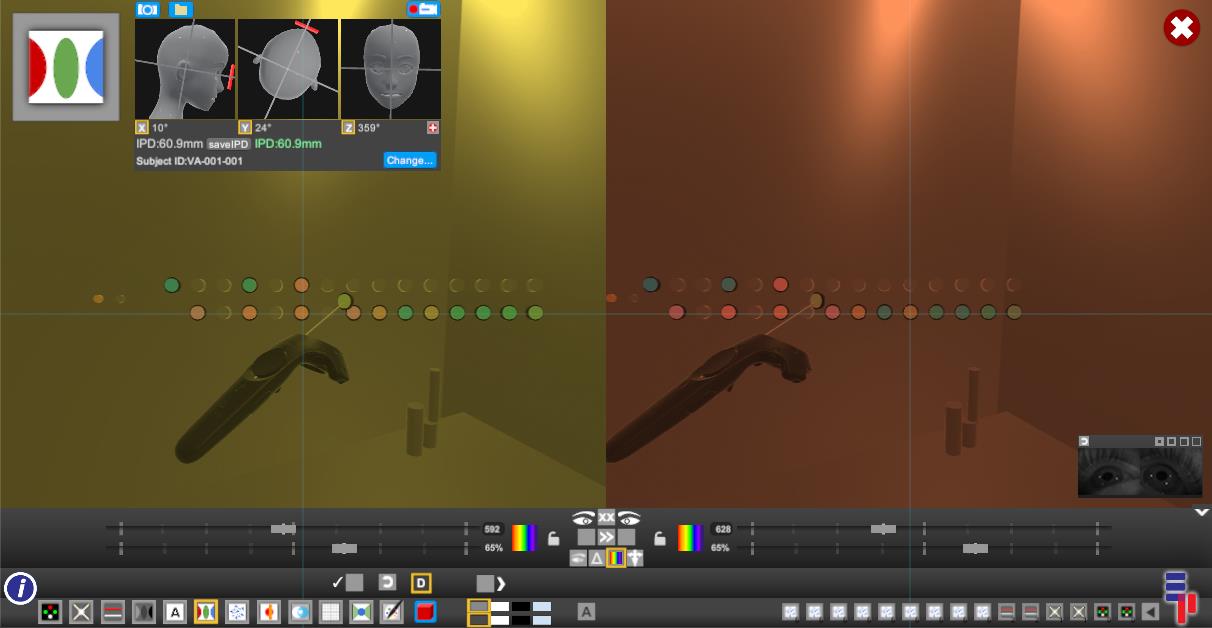
We can apply various colour filters to either eye, shifting the brightness of different colours in the spectrum. This information can be used to potentially prescribe glasses or contact lens to help compensate for colour blindness.